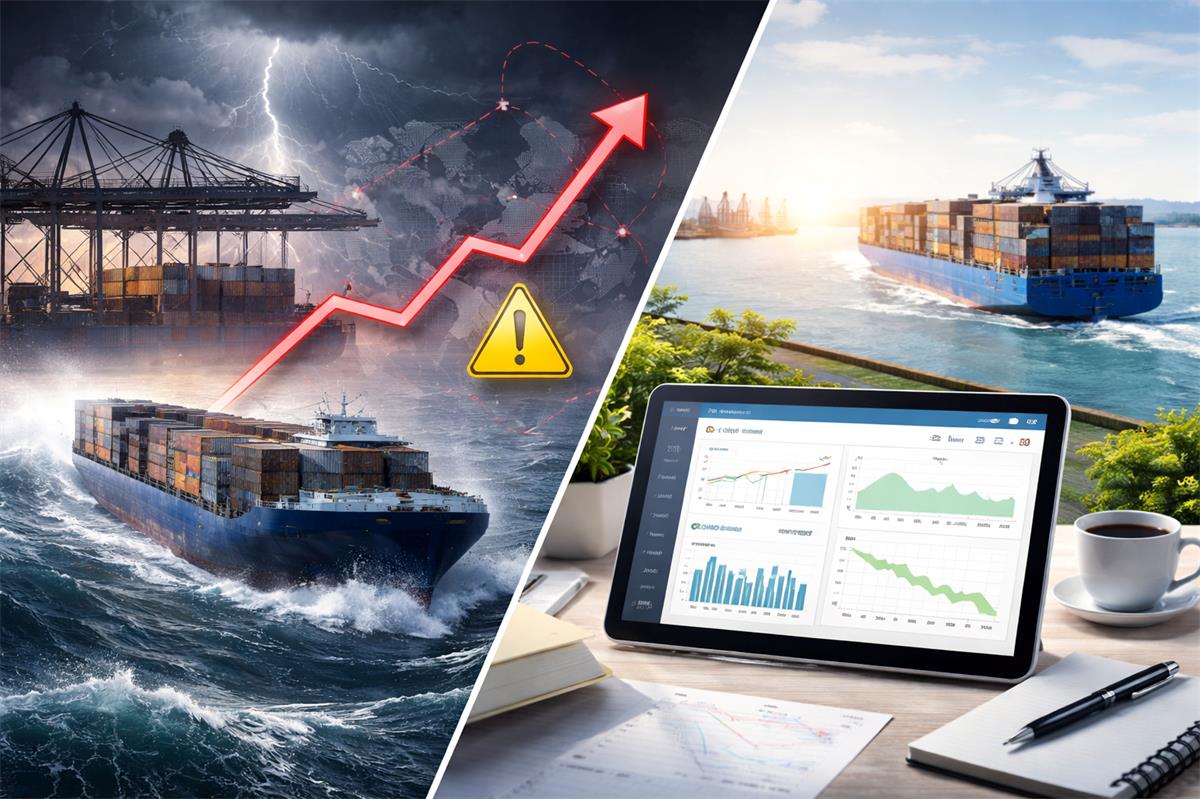
Global shipping markets do not move gradually, they shift suddenly. Freight rates can surge within weeks, ports can become congested overnight, and geopolitical or operational disruptions can quickly reshape entire trade lanes. For importers and exporters, this volatility can turn logistics from a manageable cost into a major financial risk.
Building a resilient freight budget is no longer about forecasting the lowest possible rate. It is about creating a financial structure that can absorb shocks, maintain supply chain continuity, and protect margins when market conditions change.
Recent regional conflicts and security tensions have once again shown how fragile global shipping flows can be. Trade routes may be diverted, insurance premiums can rise, airspace or ports may become restricted, and carriers can adjust capacity with little notice. These developments are not distant headlines, they directly impact transit times, landed costs, and operational planning.
In this environment, building a freight budget that prioritizes flexibility over fixed assumptions has become essential.
Why Freight Budgets Fail During Disruptions
Many companies build logistics budgets based on recent spot rates or historical averages. While this approach works in stable periods, it often collapses when market conditions change.
Common triggers that disrupt freight budgets include:
> Sudden capacity shortages
> Port congestion and vessel delays
> Rate increases (GRIs and peak season surcharges)
> War-risk insurance premiums and security surcharges
> Fuel price volatility
> Container imbalances
> Regulatory or customs changes
> Geopolitical disruptions
A resilient freight budget must therefore be built around the expectation of volatility, not the assumption of stability.
Step 1: Separate “Base Freight” From “Volatility Buffer”
The most important structural improvement you can make is to divide your freight budget into two components:
Base Freight Cost
This represents your expected shipping cost under normal market conditions.
It should be calculated using:
> Contract rates where available
> Multi-month rate averages
> Real operational transit times (not theoretical schedules)
Volatility Buffer
This is a dedicated contingency layer designed to absorb market shocks. Best practice is to allocate:
> 10–15% buffer for stable trade lanes
> 20–30% buffer for volatile lanes or emerging markets
> Higher buffers for seasonal or politically sensitive routes
--> This approach prevents budget overruns from turning into emergency financial decisions.
Step 2: Budget for Transit Time Risk - Not Only Rate Risk
Freight budgets often focus only on price per container or per shipment. However, delays can be more expensive than rate increases. Transit disruptions can lead to:
> Demurrage and detention
> Storage and port handling fees
> Production delays
> Inventory shortages
> Lost sales opportunities
The World Bank highlights that supply chain delays can increase total logistics costs by up to 20% in developing trade corridors. To manage this risk:
> Include a “delay cost estimate” per shipment
> Budget for additional safety stock
> Factor potential rerouting costs into logistics planning
--> Freight budgeting should reflect the total landed cost impact of time uncertainty, not just freight pricing.
Step 3: Diversify Routing Options in Advance
Companies that rely on a single port, carrier, or forwarder often experience the largest financial shocks during disruptions. A resilient freight budget assumes that:
> Alternative ports may need to be used
> Transit via different regions may become necessary
> Multimodal solutions (sea-air, rail-sea, feeder routing) may be required
This means budgeting for:
> Longer transit distances
> Additional handling charges
> Different inland transport rates
--> Preparing routing alternatives in advance allows you to activate contingency plans without renegotiating budgets under pressure.
Step 4: Use Rate Visibility Tools to Build Realistic Forecasts
One of the biggest budgeting mistakes is relying on a single quote or outdated rate. Instead, you should:
> Compare multiple carrier and forwarder rates
> Track rate trends over time
> Monitor seasonality patterns
> Analyze historical volatility per trade lane
Market data platforms and freight rate indexes can help you estimate realistic cost ranges rather than fixed price assumptions. A practical budgeting method is to define:
> Minimum expected rate
> Most likely operational rate
> Worst-case disruption rate
--> Budgeting based on ranges improves financial resilience. During periods of regional instability or sudden capacity shifts, companies that already monitor rate trends and alternative routing costs are able to react faster and avoid emergency logistics decisions.
Step 5: Include Surcharges and “Hidden Cost Categories”
Freight disruptions rarely appear as simple rate increases. They often emerge through additional charges such as:
> Peak Season Surcharges (PSS)
> General Rate Increases (GRI)
> War-risk surcharges
> Equipment imbalance fees
> Emergency bunker surcharges
> Congestion surcharges
These costs can represent 20–50% of total freight spend during volatile periods.
--> A strong freight budget should include a predefined surcharge allowance rather than treating these as unexpected expenses.
Step 6: Align Freight Budgeting With Inventory Strategy
Freight costs and inventory costs are deeply connected. When rates rise or transit becomes unreliable, companies often react by:
> Increasing shipment frequency
> Shipping smaller volumes
> Using faster (more expensive) modes
> Holding higher inventory levels
These decisions directly affect working capital and storage costs.
--> A resilient freight budget must therefore be developed together with procurement, sales forecasting, and inventory planning teams. This cross-functional alignment ensures logistics decisions support business continuity instead of creating financial stress.
Step 7: Build Strong Relationships With Logistics Partners
During disruptions, access to capacity often depends on relationships, not only price. Reliable freight partners can help you:
> Secure space when capacity is limited
> Provide early market intelligence
> Suggest alternative routings
> Consolidate shipments efficiently
> Reduce operational risk
--> Long-term cooperation with transparent logistics partners improves budgeting predictability and reduces last-minute premium costs.
Freight Budgeting Is a Risk Management Discipline
Modern freight budgeting is a dynamic risk management strategy. Importers and exporters who succeed during market disruptions typically:
> Budget using cost ranges instead of fixed assumptions
> Maintain contingency buffers
> Monitor freight market indicators regularly
> Diversify routing and logistics partners
> Align logistics planning with inventory and sales strategy
In volatile global trade conditions, the goal is to design budgets that can absorb it. Companies that treat freight budgeting as a strategic capability rather than an administrative task are better positioned to protect margins, maintain supply chain reliability, and capture opportunities when competitors struggle.