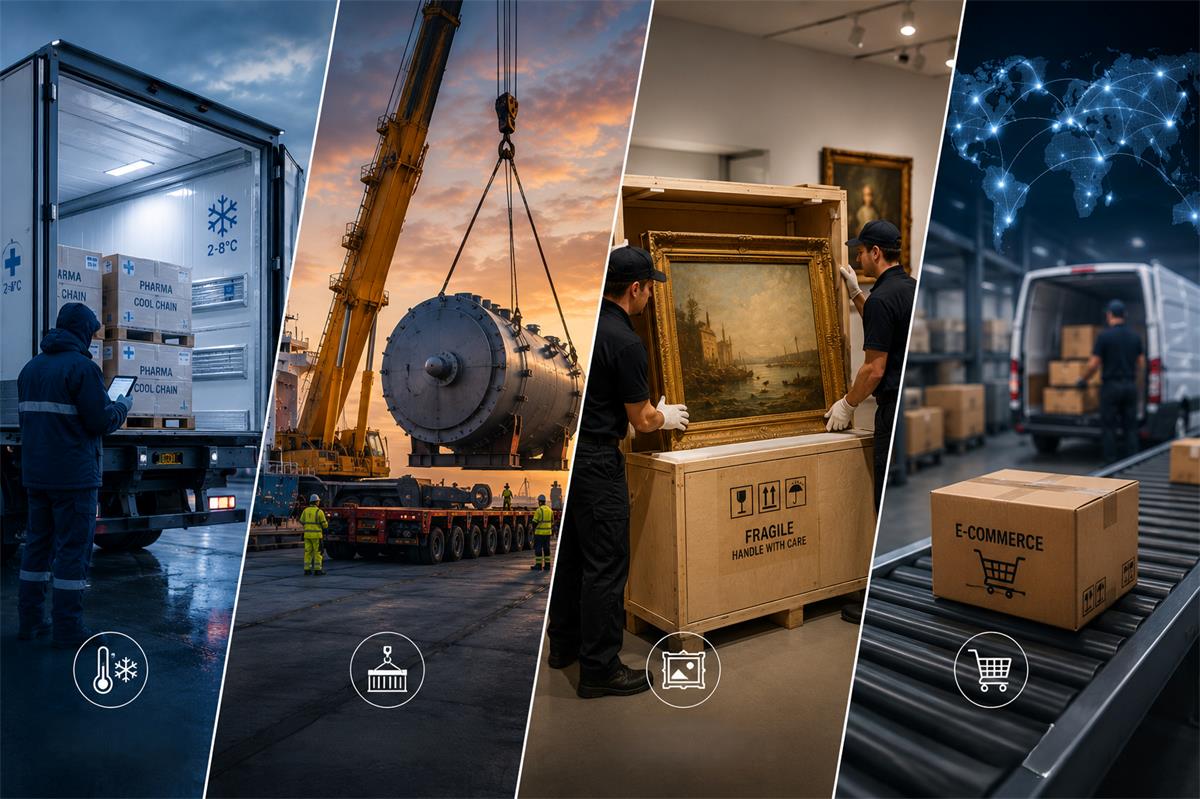
Open almost any freight directory and you'll find hundreds of forwarders offering the same services: air freight, ocean freight, customs clearance, warehousing, and trucking.
When every provider appears to offer the same thing, two challenges emerge. The first is differentiation: how do you give customers a compelling reason to choose your company over dozens of similar alternatives? The second is commoditization: when services look interchangeable, purchasing decisions increasingly revolve around price rather than expertise, reliability, or industry-specific knowledge.
Specialization addresses both challenges.
You're no longer the tenth option in a rate comparison. You're the specialist. The forwarder who knows exactly what documentation is required to ship live coral. The one with established solutions for pharmaceutical cold-chain shipments into challenging markets. The one who can look at a project cargo specification and anticipate the equipment, permits, and handling challenges before the first truck is booked.
That kind of knowledge changes the conversation. Instead of asking, "How low can you go?" customers begin asking, "Can you handle this?" And when the answer is backed by genuine expertise, experience, and a track record in their particular type of cargo or trade lane, price becomes only one part of the decision.
For smaller and mid-sized freight forwarders in particular, this creates an important opportunity. You may not have the buying power, office network, or marketing budget of a multinational forwarder - but you don't need to compete with them on every shipment, in every market.
You need to become exceptionally good at the shipments and markets where your expertise gives you an advantage.
That is the power of a niche: turning specialization into differentiation, stronger margins, deeper customer relationships, and a reputation that makes your company the obvious choice for a particular logistics challenge.
Why specialization works
Specialization creates differentiation in an industry where many companies appear similar from the outside. When a forwarder demonstrates deep knowledge in a specialized field, the discussion shifts toward trust, reliability, and expertise. This creates several important advantages:
Reduced Price Competition: Niche forwarders are less likely to compete solely on rates. If you specialize in hazardous cargo, pharmaceutical logistics, wine transportation or aerospace parts, customers understand that operational knowledge has value and your expertise becomes part of the product. This often allows specialized forwarders to maintain healthier margins compared to companies competing purely on standard freight pricing.
Stronger Customer Loyalty: Customers dealing with specialized cargo or complicated trade lanes typically prefer long-term logistics partners. Once they find a forwarder who understands their challenges, they are less likely to switch providers frequently. This creates stronger retention and more stable business relationships. Operational understanding is more difficult to replace than a simple price given by another forwarder.
Easier Marketing and Positioning: It is easier to market a specialized service than a generic one. Compare these two examples:
- “We provide global freight forwarding services.”
- “We specialize in temperature-controlled logistics between Europe and the Gulf.”
The second message is clearer, more memorable, and more targeted.
Specialization helps forwarders: Improve SEO visibility • Create more focused marketing campaigns • Build authority in specific industries • Generate referrals within niche communities • Establish stronger digital positioning
Better Operational Efficiency: Specialized forwarders often develop repeatable workflows and over time, they: Learn common documentation requirements • Build relationships with relevant carriers and agents • Understand regulatory issues • Anticipate customer concerns • Reduce operational mistakes
> This operational familiarity creates efficiency advantages that generalists may struggle to match.
Popular niches in freight forwarding
There is no single “best” niche. The right specialty depends on: Your market • Existing relationships • Team experience • Geographic position • Local industries • Operational strengths
The most defensible are those that combine complexity, compliance requirements, relationship depth, and high switching costs. Here are the most compelling options for smaller forwarders to consider:
Hazardous Cargo: Hazmat shipping requires certifications, compliance knowledge, documentation accuracy, and specialized handling. Companies that successfully develop hazardous cargo expertise often build long-term industrial customers.
Perishables and Cold Chain Logistics: Food, flowers, pharmaceuticals, and temperature-sensitive products require operational precision. Forwarders specializing in cold chain logistics develop expertise in: Temperature monitoring • Transit timing • Packaging coordination • Inspection procedures • Airline and carrier selection.
> Mistakes are costly, which increases the value of experienced providers.
Project Cargo and Oversized Shipments: Industrial projects, energy infrastructure, and heavy equipment logistics require planning and coordination capabilities that many standard forwarders do not offer. Project cargo specialists often manage: Route surveys • Port handling coordination • Specialized equipment • Multi-modal transport • Customs permits
> This niche relies heavily on experience and execution quality.
E-Commerce Logistics: Cross-border e-commerce continues to grow globally. Many online sellers require support with: Small parcel logistics • Fast fulfillment • Customs clearance • Marketplace compliance • Returns management • Last-mile coordination
> Forwarders who understand e-commerce workflows can position themselves as growth partners rather than transportation vendors.
Specific Trade Lanes: Sometimes the niche is geographic rather than commodity-based. For example: China - Africa • Turkey - Europe • Latin America - USA • India - Middle East
Trade-lane specialists understand:
> Local customs behavior > Carrier reliability > Transit patterns > Documentation expectations > Cultural communication styles
> A strong local networks become a major advantage.
Fine art & luxury goods: Fine art, collectibles, luxury retail products, and high-value assets require exceptional care throughout the transportation process. Forwarders specializing in this niche often develop expertise in: Custom crating and packaging • White-glove handling • Customs valuation procedures • Insurance coordination • Security protocols • Museum, gallery, and auction logistics
> The high value of the cargo and the importance of condition upon arrival make experience and trust critical factors when customers select a logistics provider.
Renewable Energy Logistics: The global expansion of solar, wind, and battery projects has created growing demand for specialized logistics providers. Forwarders operating in this niche often manage: Oversized project cargo • Site delivery coordination • Heavy-lift transportation • Customs compliance • Multi-country project execution
> Because renewable energy projects are highly time-sensitive and capital-intensive, experienced logistics partners can command premium rates and long-term contracts.
How smaller forwarders can identify a niche
The worst way to pick a niche is by chasing the trendiest vertical. The best way is to look honestly at where you already have an advantage and then decide how far to lean into it. Work through these questions:
1. Audit your best clients: Look at your top 10 accounts by margin, not revenue. What do they have in common? Industry? Geography? Cargo type? The niche you're already serving well is often hiding in plain sight.
2. Identify what you know that competitors don't: Proprietary knowledge is your moat. Regulatory fluency, carrier relationships on a specific lane, bilingual staff who speak a trade partner's language- these are assets that compound over time.
3. Map the underserved demand: Talk to industry associations, attend vertical trade shows, and read complaints in shipper forums. Where are shippers frustrated that forwarders "don't really get" their business? That frustration is your opportunity.
4. Assess market size honestly: A niche should be narrow enough to own, but large enough to sustain you. Use trade data (Panjiva, ImportGenius, national customs databases) to quantify the volume on a lane or in a sector before committing.
5. Focus on Problems Others Avoid: Niches often exist where complexity exists. Many forwarders avoid difficult customs environments, Complicated documentation, Dangerous goods, Time-sensitive cargo, Remote destinations or Specialized handling. But complexity creates opportunity- customers frequently pay more for reliability in difficult situations.
6. Test before you rebrand: Run a six-month pilot. Win three to five clients purely in your target niche, refine your process, and gather testimonials. Only then invest in repositioning your brand and marketing.
Practical tip: The ideal niche sits at the intersection of three things: where you already have competence, where clients find genuine complexity (and will pay for expertise), and where your larger competitors are too distracted or too inflexible to serve well. That sweet spot is where sustainable competitive advantage is built.
Building expertise in your chosen niche
Declaring a niche on your website and actually owning one are two very different things. Shippers are sophisticated. They'll probe your knowledge in the first conversation. If you can't speak fluently about their world, the regulations, the quirks, the seasonal pressures, the carrier dynamics - the positioning falls apart. Real niche expertise is built through a combination of deliberate investment and accumulated experience, so:
Invest in Knowledge: That may include: Certifications • Industry training • Regulatory education • Carrier partnerships • Trade event participation • Specialized software tools
> Keep in mind that customers quickly recognize whether expertise is genuine.
Create Relevant Content: One of the fastest ways to establish authority is through educational content. For example: Write articles about shipping challenges in your niche • Publish case studies • Share trade updates • Create customs guides that importers and exporters are Googling • Post operational insights on LinkedIn
> When your name keeps appearing where your clients are learning, the inbound leads follow.
Hire from the sector: A former pharmaceutical supply chain manager on your team is worth more than a decade of self-study. They bring networks, credibility, and institutional knowledge that can't be learned from a textbook.
Build Strategic Partnerships: Niche forwarders benefit significantly from targeted partnerships. That may include: Specialized overseas agents • Industry associations • Commodity-specific consultants • Warehousing partners • Customs brokers • Technology providers
> The depth of your network is part of the product.
Marketing your niche: how to get found and believed
Niche marketing is less about reaching the largest audience and more about becoming the obvious choice for a specific audience.
Own the language of your sector: Your website, your LinkedIn presence, your proposals- everything should use the vocabulary of your target clients. A pharmaceutical logistics page that mentions GDP compliance, QP release, and temperature excursion protocols signals to a qualified lead that you actually understand their world. Generic freight language signals the opposite.
Go where your clients gather: Trade associations, industry conferences, and vertical-specific LinkedIn groups are where your best prospects spend time. Sponsor the association newsletter. Present at the annual conference. Become the forwarder everyone in that sector has heard of.
Leverage referrals aggressively: In niche markets, word of mouth is disproportionately powerful. Every sector has informal networks: procurement managers who know each other, industry WhatsApp groups, broker communities. One delighted client in a niche can unlock three more. Build a structured referral program and ask satisfied clients explicitly for introductions.
Common mistake to avoid: Many forwarders try to signal specialization while keeping their website and pitch broadly generic "just in case." This kills both positioning and credibility. Committing to a niche means saying it clearly, loudly, and consistently, even when it feels uncomfortable to narrow your apparent scope.
Use case studies, not feature lists: "We offer temperature-controlled logistics" is a feature. "We moved 12,000 doses of a vaccine candidate across three Southeast Asian markets in 72 hours during a typhoon season disruption" is a story. Stories create trust. Build a library of anonymized case studies and lead with them at every touchpoint.
Specific advice for smaller forwarders
You don't have to fire your generalist clients overnight: Specialization is a direction, not a hard stop. Keep serving your existing book of business while actively marketing and winning in your chosen niche. The goal is to increase the proportion of specialist work over time until the positioning becomes self-reinforcing.
Strategic referral networks work both ways: When a specialized inquiry comes in that's outside your niche, refer it to a peer and ask for reciprocal referrals in your space. Build a network of specialist forwarders who complement rather than compete with you. The logistics industry is more collaborative than it appears.
Your size is actually an advantage: Large 3PLs are notoriously inflexible. They have standardized processes, account minimums, and account managers juggling too many clients. A small specialist can offer direct access to decision-makers, bespoke solutions, and a level of responsiveness that no enterprise forwarder can match. Lean into it.
Price for expertise, not for volume: The first instinct when you lose a quote is to lower your rate. Resist it. If your niche positioning is working, the right clients aren't choosing you primarily on price, they're choosing you for certainty, compliance, and the knowledge that the shipment will actually arrive right. Charge accordingly.
What niche success actually looks like
Done well, niche specialization changes the nature of your client relationships, your operations, and your team culture. Customers stop shopping you on rate with every shipment and start bringing you into conversations earlier, at the planning stage, not the booking stage. Your staff develop genuine domain expertise that makes the work more interesting and reduces errors. Your carrier and agent relationships deepen because you're delivering consistent, predictable volume in the same lanes and cargo categories. And perhaps most importantly: referrals start arriving unsolicited. When your name becomes synonymous with a specific type of freight in a specific sector, the market starts working for you. That's the compounding return that generalism can never deliver.
Diversification Still Matters
Specialization does not mean putting all your business into a single customer, commodity, or trade lane. The strongest niche forwarders build expertise in one or two core areas while maintaining enough diversification to remain resilient when market conditions change.
For example, a forwarder specializing in pharmaceutical logistics may also develop expertise in healthcare equipment, while a project cargo specialist may serve multiple industries such as energy, infrastructure, and manufacturing. The goal is to build depth of expertise without becoming overly dependent on a single source of business.
The path is not without risk. Concentrating in a niche means some disruption to that niche, a new regulation, a trade lane shift, or a sector downturn, will hit you harder than a generalist. Mitigation comes through maintaining two or three adjacent niches rather than a single vertical, staying close to your sector's regulatory and market trends, and always having a pulse on adjacent opportunities.
Turning expertise into growth
The future of freight forwarding may increasingly belong to those who combine logistics capabilities with deep industry expertise. Customers remember forwarders who solve difficult problems. They remember the company that handled the oversized cargo nobody else wanted. The forwarder who managed a complex customs situation. The specialist who understood temperature-sensitive products. The team that knew a difficult trade lane better than anyone else.
For smaller and mid-sized forwarders, specialization can be one of the most effective ways to escape price-driven competition, build lasting customer relationships, and create a position in the market that larger competitors cannot easily replicate.