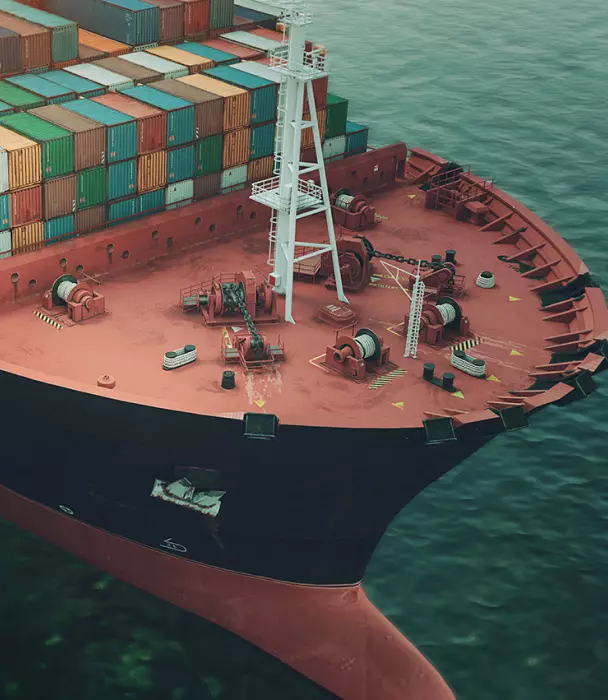
A delayed container once cost a fashion importer an entire season: the goods arrived three weeks after the retail window closed and sold at 60% markdown. The freight was cheap. The decision wasn't.
When you plan an international shipment, the ocean-versus-air question is usually framed as "cheaper versus faster." But the right choice depends on your cargo type, its value, your inventory buffer, and what a delay would actually cost your business. Here's a practical framework for getting it right.
TL;DR: A Quick Decision Checklist
-
Freight cost above 5–8% of cargo value? Air needs a strong justification beyond speed.
-
Would a one-week delay stop production or miss a sales window? Lean toward air.
-
Do you hold 4+ weeks of safety stock? Ocean is almost always the better economic choice.
-
Oversized, heavy, or certain hazardous cargo? Ocean may be your only option.
-
New product launch? Consider splitting: air the first batch, ocean the replenishment.
What's the Basic Trade-Off Between Ocean and Air Freight?
|
Ocean Freight |
Air Freight |
|
|
Cost |
Baseline (lowest per kg) |
Typically 4–6x more per kg; 10x+ during capacity crunches |
|
Transit time (Asia–US example) |
20–35 days door-to-door |
3–8 days door-to-door |
|
Capacity |
Very high; handles oversized and heavy cargo |
Limited by aircraft size and weight restrictions |
|
Schedule reliability |
More variable (congestion, blank sailings) |
Higher frequency, more predictable |
|
CO2 emissions |
Baseline |
Roughly 20–30x more per tonne-km |
The key is total business impact. A delayed shipment can mean stockouts, production stoppages, or missed sales. But paying air rates when ocean would do quietly erodes your margin on every shipment.
How Much Cheaper Is Ocean Freight, Really?
Air freight typically costs 4–6 times more per kilogram than ocean on comparable lanes, and the gap widens for bulky cargo, since airlines charge by chargeable weight (actual or volumetric, whichever is higher). The real comparison, though, is total landed cost- not just freight rates. Ocean's longer transit means more capital tied up in inventory, more safety stock to hold, and higher warehousing and insurance exposure. For fast-moving or high-value goods, those carrying costs narrow the gap. A useful rule of thumb: if freight cost exceeds 5–8% of your product's value, air freight needs a justification beyond "faster."
- High-value, low-weight goods (electronics components, pharmaceuticals, luxury items): the air premium is easily absorbed relative to product value.
- Low-value, high-weight goods (raw materials, furniture, bulk commodities): the same premium can erase your margin entirely.
Which Cargo Types Should Ship by Air?
Time-sensitive and high-value cargo is the clearest case for air:
- Pharmaceuticals and medical supplies with strict expiry windows
- Fashion and seasonal goods tied to retail calendars
- Electronics and components feeding just-in-time production
- Perishables like fresh flowers or premium seafood
When a delay translates directly into lost revenue or spoiled inventory, air's premium is simply the cost of doing business.
A note on perishables: not all of them fly. Reefers let many temperature-sensitive products: produce, frozen seafood, some chemicals, travel economically by ocean with full cold-chain control. The deciding factors are shelf life and your required delivery window, not the "perishable" label itself.
Which Cargo Types Should Ship by Ocean?
Bulk and lower-value cargo almost always favors ocean. Raw materials, industrial equipment, furniture, and standard retail goods rarely justify air rates, and because they're usually tied to forecasted demand rather than urgent replenishment, they can absorb longer transit times.
Hazardous and oversized cargo often defaults to ocean by necessity. Certain dangerous goods classifications face tight restrictions or steep surcharges in air transport, and heavy-lift or out-of-gauge cargo frequently can't fly at all.
When Does a Hybrid Air + Ocean Strategy Make Sense?
This is where the binary framing breaks down and where the biggest savings hide.
Example: an importer launching a new consumer product needs 10 tons of inventory for launch week but 40 tons for the season. Airfreighting everything would cost roughly 5x the ocean rate on the full volume. Instead, they fly the first 10 tons to hit the launch date and ship the remaining 40 by ocean for replenishment. They pay the air premium only on the volume that truly needs it.
The same logic applies to production recoveries, seasonal peaks, and stockout emergencies: split the shipment, don't switch the whole flow.
How Much Supply Chain Buffer Do You Have?
The deciding factor often isn't transit time itself, it's how much slack your supply chain has.
Ask yourself: what happens if this shipment arrives a week late?
- "Production stops" or "we miss a retail window" ? strong signal for air, almost regardless of cost.
- "We dip into safety stock" ? ocean is usually the better economic choice.
A shipper with six weeks of safety stock can absorb ocean's variability. One running lean, just-in-time inventory has far less room for ocean's longer and less predictable windows.
Don't Forget: Market Conditions and Sustainability
Mode choice isn't static. Port congestion, peak-season capacity crunches, and disruptions to major shipping lanes can shift the math: sometimes making air competitive when ocean carriers impose steep peak surcharges or transit stretches from weeks to months. Check current rates and reliability on your lane before defaulting to last year's decision.
Emissions increasingly matter too. Air freight emits roughly 20–30 times more CO2 per tonne-kilometer than ocean. If your company reports Scope 3 emissions or your customers ask about carbon footprint, mode choice is one of the biggest levers you have.
Four Questions Before You Book
- How time-sensitive is this shipment relative to my inventory buffer?
- What is the freight cost as a percentage of total cargo value?
- Are there regulatory, size, or weight constraints that limit my options?
- Would a split shipment- air for the urgent volume, ocean for the rest, beat an all-or-nothing choice?
These questions won't replace expert advice from your forwarder, but they give you a consistent starting point, and make you a sharper counterpart in that conversation than "what's cheaper?"
The Bottom Line
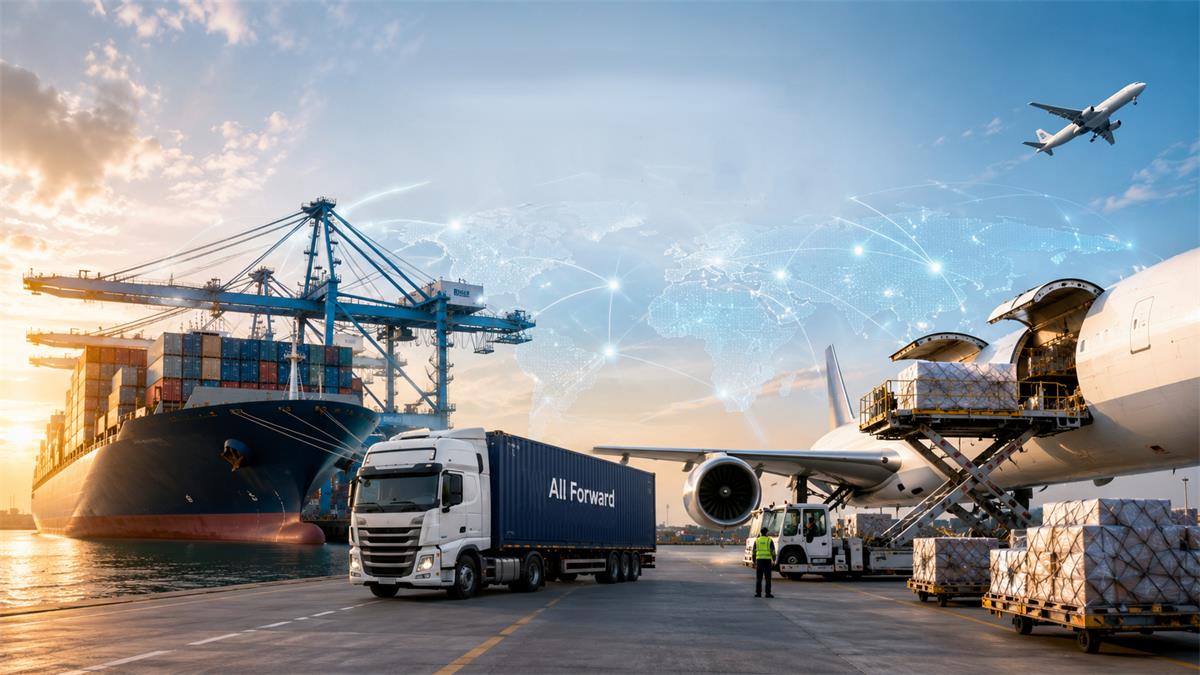
Ocean and air freight each play a critical role in global supply chains. The right choice depends not just on the rate, but on your cargo's value, urgency, dimensions, and the real business cost of a delay. Shippers who consistently get this right treat mode selection as part of supply chain strategy, not a line-item comparison.
Ready to compare real options for your next shipment? With All Forward, you can send rate requests to trusted forwarders, compare ocean and air quotes side by side, and make the call with actual numbers - all in one platform.
businesses to compare freight solutions, connect with trusted forwarders, and make more informed logistics decisions through a single platform.